Last updated November 25, 2026
Utilities for an ADU: Water, Sewer, Power and Meters
Most Folsom homeowners budget an ADU around walls, roof, kitchen and finishes. Then the utility bill lands and it’s nothing like what the spreadsheet assumed. Here’s the part that catches people: the water, sewer and power numbers aren’t guesses. They’re published fees and determinable connection costs. The mistake is timing. Homeowners and even experienced contractors routinely leave these line items out of the contract price until after the permit is approved, when the homeowner is committed and the fees are simply non-negotiable. This guide shows you exactly where those costs live in Folsom so you can price them before you sign, not after.
Quick Answer
In Folsom, an ADU’s utility work comes down to three systems: power through SMUD, water and sewer through the City of Folsom, plus gas if the unit isn’t all-electric. Whether you share the main house’s meters or install separate ones is the single biggest decision, because it changes your fees, your construction cost and how the unit can be rented. The right answer depends on your lot, your existing service capacity and how you plan to use the ADU – all things we confirm with the city and SMUD during design, before plans are final.
Table of Contents
- Why Utility Connections Get Underestimated
- Folsom Sewer Connection Fees and How Unit Size Affects Them
- SMUD Electric Service: Meters, Panel Upgrades and Timelines
- Folsom Water: New Lateral or Expanded Meter?
- Shared Meter or Separate Meter? The Rental Question
- Gas Service and All-Electric ADUs in Folsom’s Climate
- The Right Order to Sequence Utility Work
- Utility Checklist Before You Sign a Contract
Why Utility Connections Get Underestimated
Utility connections sit in a strange blind spot. They’re not design decisions, so your designer may not flag them. They’re not visible in renderings, so they’re easy to forget when comparing bids. And many contractors quote them as an allowance or exclude them entirely, which means the number doesn’t firm up until you’re already deep into the project.
The costs themselves are far more predictable than they look. The sewer connection fee, the electric service program, the water lateral – in Folsom, each one has a defined process and a defined price. The problem is discovery order. If you investigate utilities at the design stage, you can build an accurate number into your budget and your contract. If you investigate after permit approval, you’re paying whatever the fee schedule says with no room to restructure your plan.
We’ve seen this play out across Folsom neighborhoods like Empire Ranch and Folsom Ranch, where new-construction service conditions differ from older pockets near the historic district. On a newer lot, the water and sewer may be closer to the street and easier to tap. On an older parcel, the existing main might be at capacity. Neither is bad news – it’s just information you want in hand early. Bringing utility investigation into the pre-design phase is part of what our in-house design and permit service does, and it’s one reason we ask about meters and service capacity before we draw anything. Site-built or prefab – we build both – and the utility path matters either way, including on factory-built units from Abodu, Cover or Dvele.
Folsom Sewer Connection Fees and How Unit Size Affects Them
The short answer: Folsom charges an ADU sewer connection fee that generally scales with the size and bedroom count of the unit, and there’s a critical exemption for a junior ADU that shares the existing house’s sewer connection rather than adding a new one. Confirm the exact current fee schedule with the City of Folsom before you finalize your budget, because fee schedules are updated periodically and the number that matters is the one in force when you connect.
How the fee gets calculated, in general terms:
- Unit size and fixtures. Sewer fees are typically tied to the number of fixtures and the size of the unit. A larger ADU with a full kitchen, full bath and laundry loads the system more than a studio, and the fee generally reflects that.
- Bedroom count. Some fee formulas key off bedroom count, so a two-bedroom ADU can carry a higher connection charge than a studio even at similar square footage.
- New connection versus shared connection. A JADU that shares the existing sewer line typically avoids a separate connection fee, which is one of the reasons a garage conversion into a JADU pencils out differently than a fully independent detached unit.
- Connection point. If your ADU can tie into the existing lateral versus requiring a new tap at the main, that changes both the fee and the trenching cost.
The practical move is to know your unit type before you commit to a footprint. A 500-square-foot studio and an 1,100-square-foot two-bedroom are different projects to the sewer department, and that difference shows up in your total. We work through this with the city’s building and planning staff during design so the fee is a known line item in the written estimate, not a surprise.
SMUD Electric Service: Meters, Panel Upgrades and Timelines
SMUD has an ADU-specific electric service process. If you want a separate meter for your unit, you apply through SMUD’s ADU service program, and the work is scheduled around your construction sequence. The timeline runs on SMUD’s schedule, not your contractor’s, which is why we build the electric meter request into the project calendar early rather than treating it as a finishing step.
The hardest question on the electrical side isn’t the meter. It’s panel capacity. An ADU adds load to your property: heating and cooling, water heating, cooking, lighting, general outlets. If your main house panel is already at or near its capacity, adding the ADU’s load means a panel upgrade, and the cost of that upgrade lands on the ADU budget whether you use a separate meter or a shared one.
- Confirm existing service. A licensed electrician reviews your panel size and current load to determine whether there’s headroom for the ADU.
- Design the ADU’s load. All-electric systems – heat pump, induction, heat pump water heater – draw differently than a gas range and a gas water heater. The load calculation drives the panel decision.
- Request the meter through SMUD. If you’re going separate-meter, the application goes to SMUD’s ADU program; if shared-meter, the connection ties into the existing service.
- Schedule the meter install around construction. Meter work is sequenced so it lands when the panel and service are ready, not before.
This is dangerous work and not a DIY job. The service entrance, the panel and anything upstream of the meter involve live utility lines, and a mistake can injure someone or fail inspection. We coordinate licensed electrical work on every ADU we manage, and we don’t hand the electrical scope to an unlicensed helper to save a few hundred dollars.
Folsom Water: New Lateral or Expanded Meter?
Folsom Water decides between a new service lateral and an expanded meter based on your existing water service size and the demand your ADU adds. There’s no single rule that covers every parcel, but the question breaks down fairly cleanly: is your current water line and meter large enough to serve both the main house and the ADU, or does the combined demand exceed what the existing service can deliver?
Here’s how you figure out which applies to your specific parcel:
- Start with the city’s GIS tools. Folsom’s parcel viewer shows your lot lines, existing utilities and service locations. You can see where the water main runs and where your service ties in before anyone steps on site.
- Check your existing service size. The water department has a record of your service. A home plumbed decades ago may have a smaller service than a newer build in Empire Ranch.
- Calculate combined demand. Fixture count for the house plus the ADU determines whether the current meter serves both. A large ADU with a full bath, kitchen and laundry raises demand significantly.
- Confirm with the city. Once you’ve done the homework, confirm the determination with Folsom Water directly. The rule depends on the lot and the existing service, and the city is the authority, not a rule of thumb.
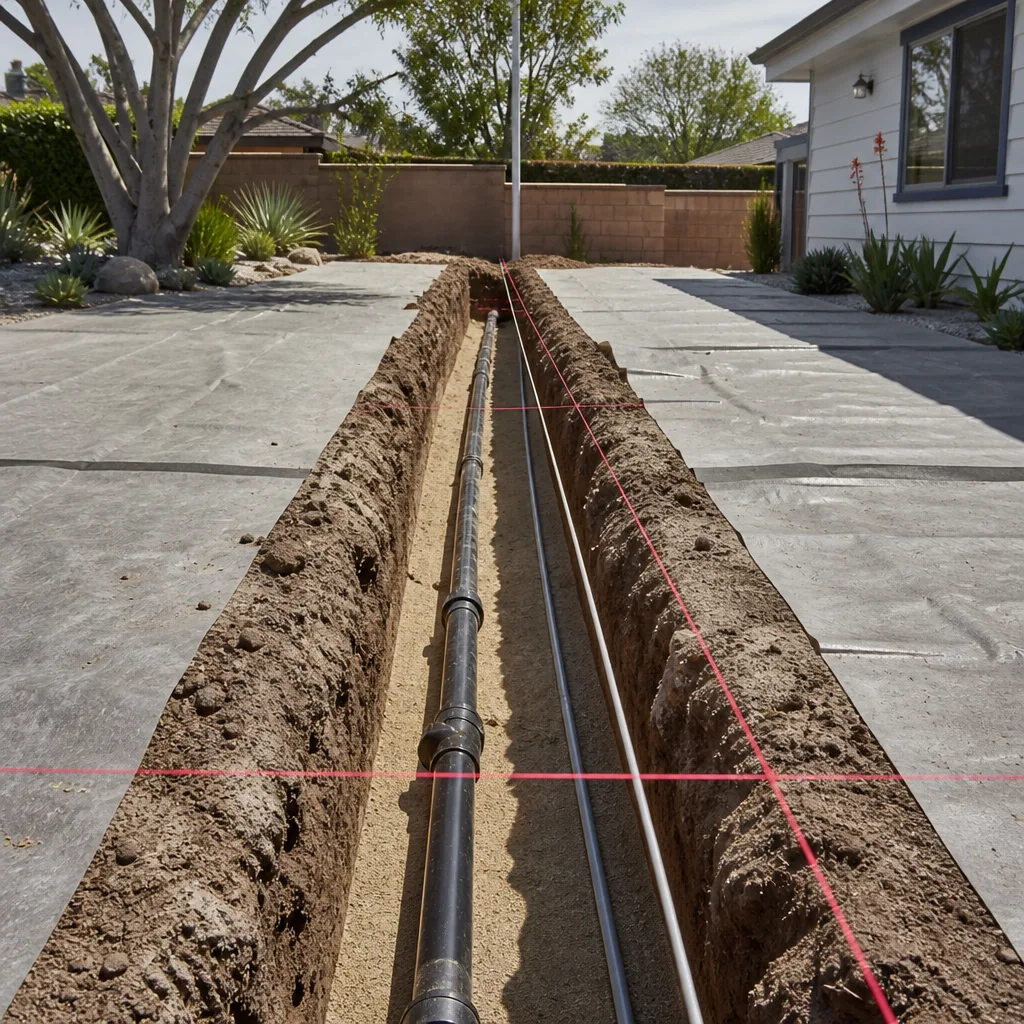
A new lateral means excavating to the main and running new service, which is the larger of the two jobs. An expanded meter is often simpler but still requires coordination with the city. Either way, it’s a line item that belongs in your budget before permit approval, not after. This is also a good moment to note that Folsom’s summers are hot and dry – the ADU’s landscape and any exterior hose bibs should be planned with water efficiency in mind, and finish grading around a new lateral matters for drainage.
Shared Meter or Separate Meter? The Rental Question
The shared-versus-separate meter decision has less to do with construction cost than with how you’ll use the unit. If the ADU will house a family member and you’re not worried about who pays for what, a shared meter is usually the simpler and cheaper path. If the unit will be rented, separate metering changes the economics and the legal picture.
Here’s the trade-off in plain terms:
- Shared meter, no rent billed for utilities. Simplest to set up. The household’s power and water run on one bill, and the tenant’s usage is effectively included in rent. You set a rent that reflects the median usage and you avoid the complexity of submetering for billing.
- Shared meter with an in-unit submeter. Possible in some setups, but it adds equipment and a reading and billing routine, and not all submetering arrangements are clean under the rules. Confirm what’s allowed before designing around it.
- Separate meters. The unit gets its own electric and, where available, water service. The tenant opens their own accounts, the rent is clean, and the unit’s utility costs are transparent. This is the arrangement most renters expect and most landlords prefer for predictability.
Then there’s resale. A separately metered ADU reads as a self-contained unit to a future buyer, appraiser or lender. A shared-meter ADU can still be a strong asset, but the buyer has to accept that the utilities are intertwined with the main house. In Folsom’s market, where ADUs are increasingly valued as rentable space, separate metering is often worth the upfront cost for the flexibility and clarity it buys. Rental rules depend on the city, and the City of Folsom is the place to confirm how any rental arrangement is regulated – we check with the city rather than assume.
Gas Service and All-Electric ADUs in Folsom’s Climate
An all-electric ADU generally avoids the cost and complexity of a new gas lateral, and in Folsom’s hot, dry climate that’s a practical advantage. A heat pump handles both heating and cooling efficiently, a heat pump water heater covers domestic hot water, and an induction range covers cooking. Skip the gas line and you skip the excavation, the meter, the pressure testing and one more utility to coordinate.
The alternative is a gas ADU, typically for a homeowner who wants a gas range or a gas water heater. That path means running a new gas service lateral from the main to the unit, which is a licensed plumbing and utility scope and adds cost and schedule to the project. Gas is not something to improvise; it’s a safety-critical system and the work has to be permitted and inspected.
There’s also the Title 24 side. California’s energy code applies to an ADU, and how you heat, cool and light the unit affects compliance and the design of the envelope. All-electric systems often pair naturally with the code’s direction, but the specifics depend on your design and the code edition in effect when you pull your permit. We don’t quote code section numbers we can’t verify – what we do is design the mechanical and plumbing systems with our licensed trade partners and confirm code compliance with the city as part of the permit package. On a prefab unit from a brand like Dvele, the energy package is largely built in, which simplifies this step.
The Right Order to Sequence Utility Work
Utility work goes wrong when it’s sequenced as an afterthought. Done in the right order, the fees and connections land on schedule and inside the budget. Here’s the order we follow:
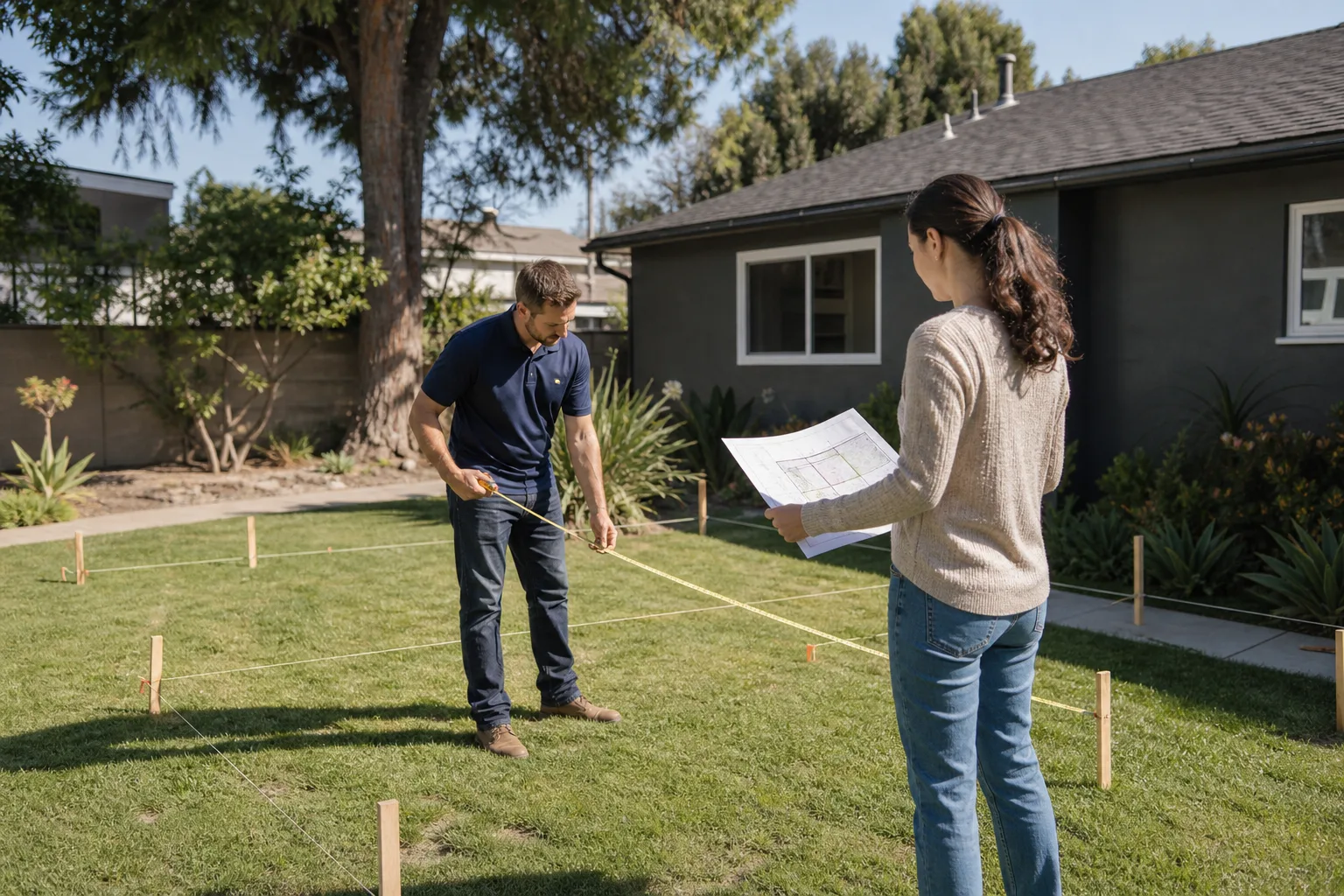
- Pre-design utility investigation. Before any drawings, we look up the parcel, confirm existing service sizes, and identify which connections will be new versus shared. This is where the ADU builders who quote utilities late tend to lose money.
- Design and fee confirmation. We design the unit around the utility reality and confirm the sewer, water and electric approach with the city and SMUD while plans are still adjustable.
- Permit application. Utility connections are part of the permit package, so the plan set reflects them from the start.
- SMUD meter request. The electric service application and meter request are submitted ahead of construction so SMUD’s schedule overlaps with the build, not with move-in.
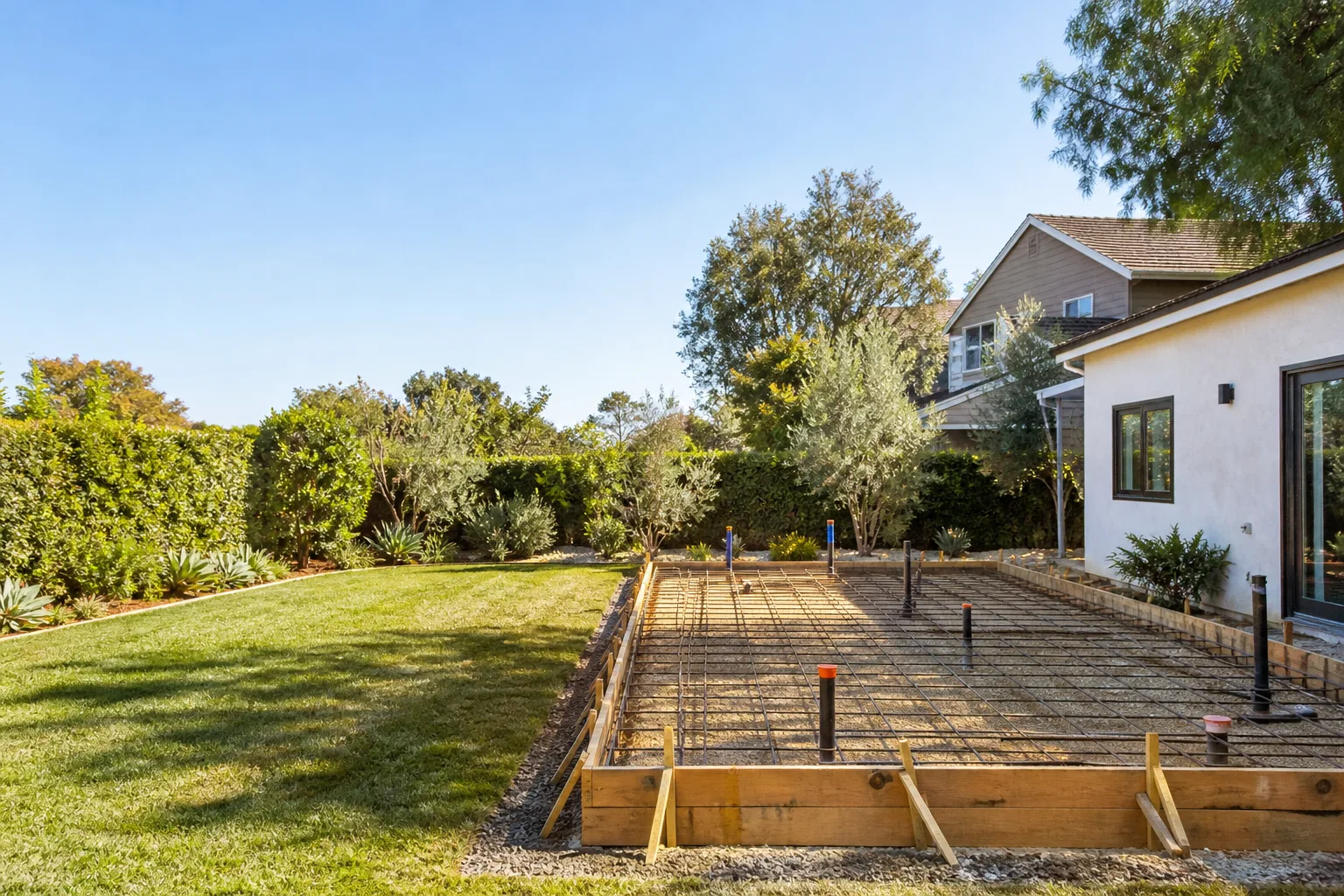
- Construction, trenching and rough-in. Water lateral, sewer tie-in and electrical conduit go in during the build, coordinated with foundation and grading.
- Inspections and final connections. The city inspects the work, SMUD sets the meter, and the utility accounts are handed over.
We build both pathways – site-built and prefab – and this sequence holds for either. The full-spectrum ADU coverage we offer, including garage conversions, JADUs, detached units and home additions, means we’ve run this order across every project type rather than learning it on yours.
Utility Checklist Before You Sign a Contract
Before you sign any ADU contract in Folsom, get these items answered in writing:
- Is the sewer connection fee in the contract, or is it an allowance? An allowance means the number can move. A stated fee is a fixed line item.
- Does the contract address a potential panel upgrade? Ask whether the electric scope includes the panel work and what happens if load calculation requires a larger panel.
- Is the water service determination made? New lateral or expanded meter – get the determination in writing, based on your parcel and existing service.
- Shared or separate meters? The contract should state which arrangement is being built, because it affects both cost and how the unit can be used.
- Is the SMUD meter request part of the schedule? A late meter request can stall occupancy. It should be in the project calendar.
- Are gas connections in or out? If the design is all-electric, confirm no gas work is included and priced.
- Are permits and inspections included? Utility connections need permits and inspections. The contract should say who pulls them and who pays.
A written, line-item estimate that addresses all seven is the difference between a budget that holds and one that grows after approval. That’s the standard we hold ourselves to.
Common Mistakes to Avoid
- Pricing utilities after permit approval. Once the permit is approved, the fee schedule applies as written and you’ve lost the ability to restructure your unit type or footprint. Investigate first.
- Assuming the existing panel has room. A panel at capacity needs upgrading, and that cost belongs in the ADU budget from day one. Have an electrician check the load before you commit.
- Skipping the GIS look-up. Folsom’s parcel tools show where the mains run and what your service looks like. Not checking is how homeowners get surprised by the lateral question.
- Choosing a shared meter when separate metering was the plan. Submetering for billing adds complexity, and a shared meter can complicate the resale story. Decide based on the rental plan, not just the construction price.
- Forgetting the JADU sharing exemption. A JADU that shares the existing sewer connection avoids the separate connection fee. Miss it and you may overpay for a fixture you didn’t need.
- Assuming a gas ADU is the default. In Folsom’s climate, all-electric is often simpler and avoids a new gas lateral entirely. Plan the mechanical systems early.
- Leaving the SMUD meter request until the end. SMUD’s schedule is not your contractor’s schedule. Submit early and keep the meter on the critical path.
When to Call a Professional
Utility connections touch live service, permitted work and city fee schedules – all areas where a mistake is expensive and sometimes dangerous. Call us if any of these sound familiar: you’re planning an ADU and don’t know whether your panel has room; your budget has no line item for the sewer connection fee; you’re weighing shared versus separate metering for a rental; you want to know whether your parcel needs a new water lateral before you commit to a design; or you’ve already been told your plans are approved and the utility costs are still open. We also step in when a homeowner has a design but no clear path to permits, or when a contractor’s bid is silent on utilities.
The earlier we get involved, the more of these costs we can pin down while the design is still flexible. ADU Builder Folsom offers free estimates in Folsom – call (279) 321-8329. We answer 24/7. Fast dispatch from 7am to 7pm, Sunday through Friday. Estimates are free, and the written estimate is where the final price is set.
Frequently Asked Questions
It depends on the unit type. A detached ADU usually needs its own connection and carries the corresponding Folsom sewer connection fee scaled to unit size, while a junior ADU that shares the existing house connection generally avoids a separate connection fee. The City of Folsom’s current fee schedule is the authority on the exact number, so confirm it before you budget. Call (279) 321-8329 for an estimate – estimates are free.
A panel upgrade is priced per job by written estimate once we know your existing service size, the ADU’s load and whether you’re going separate-meter. Panel upgrades are one of the most commonly underestimated ADU costs because homeowners assume the main house has room, and often it doesn’t. We confirm the load and include the upgrade in the written estimate when it’s needed. Call (279) 321-8329 for an exact quote – estimates are free.
You can share, but it has real consequences for billing, rental income and resale. With a shared meter, the tenant’s usage is effectively bundled into the rent, and the unit reads as less self-contained to a future buyer. Separate metering through SMUD’s ADU program keeps the rental arrangement clean and the unit’s costs transparent. Rental rules depend on the city, so we check with Folsom before recommending an approach. Call (279) 321-8329 for an exact quote – estimates are free.
Only if the existing water service can’t handle the combined demand of the house and the ADU. Many parcels are fine on the existing service with an expanded meter; others need a new lateral from the main. You can start the determination with Folsom’s GIS parcel tools and confirm the answer with Folsom Water, and we’ll walk you through it as part of design. Call (279) 321-8329 for an exact quote – estimates are free.
Usually, because an all-electric design avoids running a new gas lateral, the excavation and the gas meter. In Folsom’s hot, dry climate a heat pump handles cooling and heating well, which makes the all-electric path practical rather than a compromise. The exact savings depend on your design and where the existing gas main sits relative to the ADU. Call (279) 321-8329 for an exact quote – estimates are free.
At the pre-design stage, before any drawings are committed and long before permit approval. The sewer fee, water service determination, panel capacity and meter decision are all knowable early, and once they’re in the contract they stop being surprises. Investigating late is the single most common reason an ADU budget overruns in Folsom. Call (279) 321-8329 for an exact quote – estimates are free.
The Bottom Line
Utility connections are the most predictable part of an ADU budget – and the most often left out. In Folsom, the sewer connection fee, the SMUD electric service and the water lateral or meter determination are all defined processes rather than wildcards. Get them investigated during design, confirmed with the city and SMUD, and written into a line-item estimate before you sign. Do that, and the cost that surprises so many homeowners becomes a number you planned for. Skip it, and you’ll meet it after permit approval, when it’s fixed. Wherever you are in the process, from concept to ADU Builder Folsom, we can help you start with the utility picture in hand. Call (279) 321-8329 for a free estimate. We answer 24/7. Fast dispatch from 7am to 7pm, Sunday through Friday.
Written by the team at ADU Builder Folsom.