Last updated November 25, 2026
Prefab or Site-Built ADU in Folsom: How to Choose
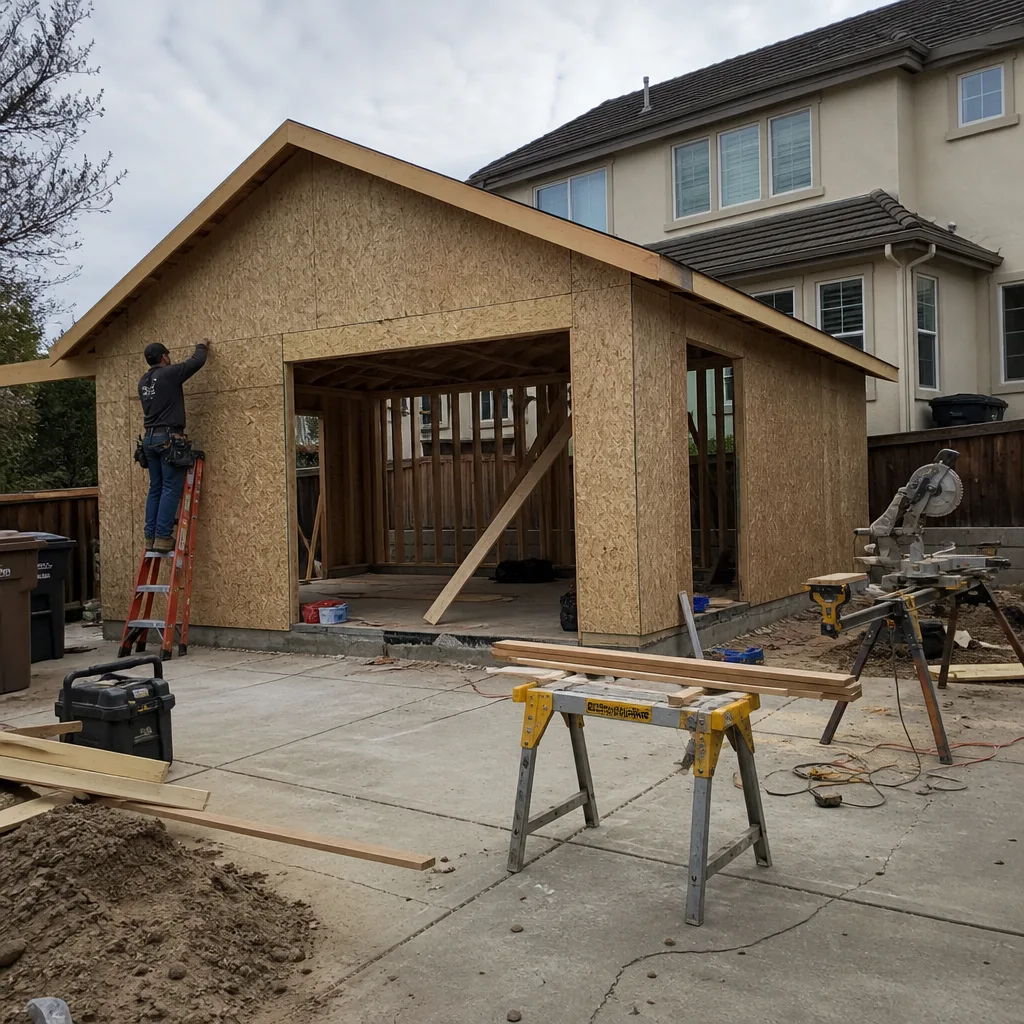
Here’s the misconception we hear most: homeowners assume that buying a prefab ADU means skipping the hard part. No design phase, no permit headache, no waiting on a framer. It’s an understandable assumption, and it’s wrong. A prefab unit from Abodu, Cover, or Dvele still needs a Folsom permit, still needs site work, still needs utility connections, and still gets inspected. The factory controls the box. Everything around the box is your project. Homeowners who choose prefab expecting to bypass the permit process end up frustrated; the ones who choose it for schedule certainty and finish consistency usually get exactly what they paid for. This guide walks you through the real differences so you can decide which path fits your Folsom lot, your timeline, and how your household will actually use the unit.
Quick Answer
Choose prefab in Folsom when your lot has clean crane access, your use case fits a standard floor plan, and schedule predictability matters most. Choose site-built when your lot is tight, your use case needs a custom layout, or you want direct local accountability for every trade. Both paths require Folsom permits, site work, and utility hookups, so the decision hinges on access, customization needs, and how much control you want over the build sequence.
Table of Contents
- What Off-Site Construction Actually Changes About Folsom Permits
- Crane Access and Lot Clearance: The Prefab Make-or-Break
- Finish Quality at Equivalent Price Points: Where Each Path Wins
- Timeline Comparison: Factory Lead Time vs. Concurrent Site-Built Scheduling
- Which Folsom Homeowner Profile Fits Which Path
- How an ADU Project Actually Runs in Folsom, Step by Step
- Common Mistakes to Avoid
- When to Call a Professional
What Off-Site Construction Actually Changes About Folsom Permits
Off-site construction moves the framing, wiring, plumbing rough-in, and finishes into a factory. It does not move the permit. When a prefab ADU comes to Folsom, the city’s planning and building departments still review the project against local zoning, still check setbacks against your specific lot, still look at utility connections, and still conduct inspections on the site-built portion of the work. The factory’s third-party certifications on the module itself streamline some of the building review, because the state has already signed off on how the unit was constructed. What the city defers to the factory is the internal construction of the box; what the city reviews directly is everything the box connects to.
In practice, that means a prefab project in Folsom has two parallel approval tracks running at once. The first track covers the module: manufacturer documentation, engineering stamps, and the factory’s own certification package. The second track covers your site: foundation, utility trenching, electrical service, gas if applicable, and final connections. The city will want both tracks resolved before it signs off. Homeowners who expect the first track to carry the second are the ones who get surprised mid-project. The rules depend on the city and the lot, and we confirm them with Folsom’s planning department before plans are final.
Where this gets genuinely efficient is duplicate review. A site-built ADU requires the building department to review every framing detail, every electrical panel layout, every plumbing run. A certified prefab module arrives with that work already reviewed at the state level, so the city’s review narrows to site integration. That narrower review can move faster, but it never goes away.
- City reviews directly: zoning compliance, setbacks, height, lot coverage, foundation design, utility connections, and final inspection.
- City defers to factory certification: the module’s structural, electrical, plumbing, and mechanical construction.
- Both must clear: site work, utility trenching, final connections, and the inspection that signs off the whole project.
The practical takeaway is that you should budget permit time for a prefab ADU in Folsom just as you would for a site-built one. The schedule savings from prefab come from the construction phase, not the approval phase.
Crane Access and Lot Clearance: The Prefab Make-or-Break
This is the section that eliminates prefab for some Folsom lots entirely, and it’s the piece most homeowners don’t think about until the module is already built. A finished ADU module arrives on a truck and gets lifted into place by a crane. That crane needs a place to set up, room to swing, overhead clearance to swing through, and a clean path from the street to the foundation. If any of those conditions fail, the module cannot be delivered, and the project either converts to site-built or stalls.
What we look at during a site assessment on a Folsom property:
- Street width and approach. The delivery truck and crane carrier need to reach the lot and set up without blocking the street in a way the city won’t allow. Narrow residential streets in older Folsom neighborhoods can be a real constraint.
- Overhead clearance along the crane’s swing path. Power lines, service drops, tree canopies, and street lights all sit in the swing zone on some lots. Utility coordination may be required, and some lots simply don’t have a workable path.
- Tree setbacks and canopy. Mature trees in Folsom yards are a genuine asset and a genuine obstacle. The crane needs vertical clearance above the delivery path, and the module itself needs a clearance envelope around the foundation during the lift.
- Setback from the foundation to the nearest obstruction. The crane has to reach the placement point without hitting a fence, a neighboring structure, or a mature tree trunk.
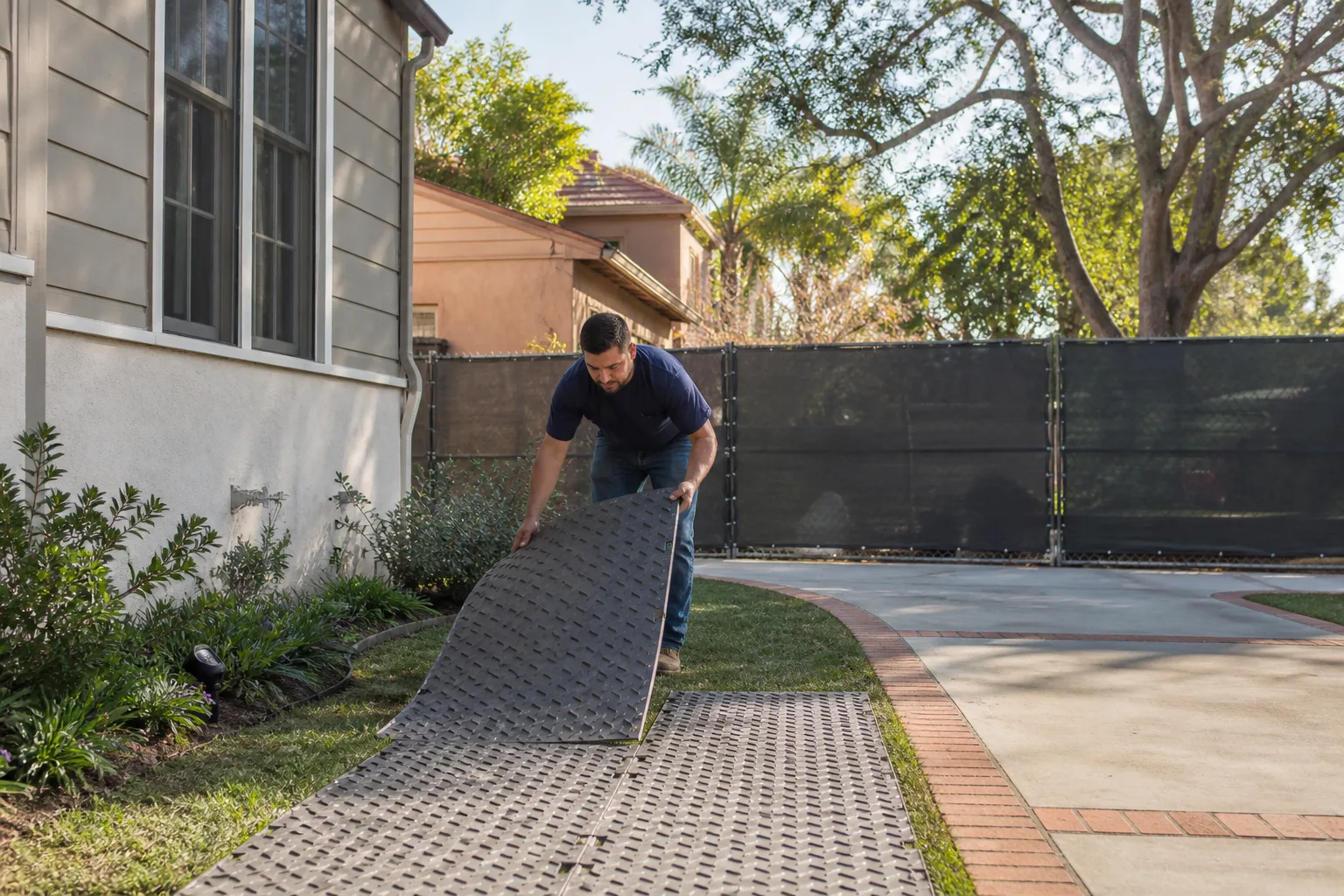
- Ground bearing capacity along the crane’s track. The crane pads need stable ground. Sloped lots, soft soil, or landscaping that has to be protected can add site work.
When a lot can’t clear these requirements, that’s not a failure of prefab. It’s a signal that site-built is the right path for that property. Site-built construction delivers materials in smaller loads, stages them on the lot, and assembles in place, so tight access is a logistics annoyance rather than a project-ending constraint. Knowing which category your Folsom lot falls into is the single most useful early decision you’ll make.
Finish Quality at Equivalent Price Points: Where Each Path Wins
At comparable total cost, prefab and site-built ADUs in Folsom don’t produce the same quality story. They produce different ones, and it’s worth understanding exactly where each model is strong so you’re comparing like for like.
Where factory construction wins. Factory environments are controlled. Humidity, temperature, and dust are managed, which matters enormously for moisture control in the framing, drywall, and finishes. A module built in a factory doesn’t get rained on during framing, doesn’t sit exposed to weather during finish work, and doesn’t depend on the schedule discipline of a dozen separate subcontractors. The result is consistency: unit forty-seven from a given factory line looks like unit one, and the fit and finish tolerances are set by the manufacturer’s process, not by which crew happened to show up on a given day. For rental-income-focused ADUs where predictable, durable finishes matter more than design personality, this is a real advantage.
Where site-built wins. Site-built construction offers flexibility the factory can’t match. Custom floor plans, non-standard ceiling heights, unusual window placements, integration with existing site features, and use cases that don’t fit a catalog plan all belong on the site-built path. Site-built also gives you direct accountability for every trade. When a subcontractor’s work needs attention, there’s a local person who did that work and can come back to it. With a factory module, the manufacturing is done elsewhere; the local team handles installation and site integration. That’s not a flaw, but it does change who you call if something needs adjustment later.
The honest comparison at equal price:
- Predictability of finish: prefab wins. The factory process produces the same result every time.
- Moisture control during construction: prefab wins. The module isn’t exposed to weather during framing and finishing.
- Design flexibility: site-built wins. Custom layouts, non-standard dimensions, and site-specific design all live here.
- Local accountability for each trade: site-built wins. Every subcontractor is local and reachable.
- Speed of finish work: prefab wins. The finish work happens in parallel with site work, not in sequence after it.
Neither list is a knockout. The right question is which set of advantages matches your actual use case. If you want a durable, predictable rental unit that performs the same way every year, prefab’s advantages align with your priorities. If you’re building a home for an aging parent with specific accessibility needs and a floor plan that doesn’t exist in any catalog, site-built is the only path that gets you there.
Timeline Comparison: Factory Lead Time vs. Concurrent Site-Built Scheduling
The timeline story is where prefab gets its reputation, and it’s worth understanding precisely why. Prefab doesn’t eliminate construction time; it moves most of the construction into a factory where it happens in parallel with site work. A site-built ADU in Folsom runs design, permit, foundation, framing, rough-in, finishes, and final inspection largely in sequence, because each phase depends on the one before. A prefab ADU runs the factory build and the site work in parallel: while the module is being manufactured, the foundation gets poured, utilities get trenched, and the site gets prepared. When the module arrives, it gets set, connected, and finished.
What that means in practice:
- Design and permit phase: similar length for both paths. Prefab units ship with a standard plan set, which can simplify design, but the site-specific permit work (zoning, setbacks, site plan) takes roughly the same effort either way.
- Site prep and foundation: runs concurrently with factory build on the prefab path; runs sequentially at the start of the build on the site-built path.
- Factory build phase (prefab only): the manufacturer’s lead time, which varies by brand and by unit model, runs in the background while site work proceeds.
- Construction phase (site-built only): framing through finishes, all sequential, all dependent on each trade finishing before the next starts.
- Installation and final connections: crane set, utility hookups, final touches, and final inspection.
The reason prefab feels faster is that the manufacturer’s lead time overlaps with site work instead of sitting end-to-end with it. The reason prefab doesn’t feel instantaneous is that the site work still has to happen and still has to clear inspection. Our technicians have up to 9 years of experience coordinating both paths, and the honest answer for any Folsom project is that the schedule is set in the written estimate, not promised in a sales conversation. Site-built timelines depend heavily on how quickly the trades move and how quickly the city review comes back; prefab timelines depend on the manufacturer’s queue plus the site work.
Which Folsom Homeowner Profile Fits Which Path
The most useful decision framework is to match the path to what the ADU is actually for. Three broad profiles cover most Folsom projects.
Rental-income-first on an open lot
If the primary goal is a rentable unit that generates income, and the lot has clean crane access, prefab is usually the strongest match. You’ll want a durable, standardized finish package, a floor plan that rents well, and a timeline that lets you start generating income as soon as possible. A factory-built unit from Abodu or Cover delivers on all three. The customization you’d want from site-built doesn’t buy you much on a rental unit, and the schedule predictability has real financial value.
Multigenerational living with specific needs
If the ADU is for an aging parent, an adult child, or a household member with specific accessibility or layout requirements, site-built is almost always the right call. Custom floor plans, single-level accessibility, wider doorways, specific kitchen layouts, and integration with the main home’s systems all live on the site-built path. A junior ADU may also be worth exploring if you’re converting existing space rather than building new. The flexibility you need is exactly what factory standardization takes away.
Property-value-first on a constrained lot
If the lot is tight, has mature trees, has limited street access, or has an existing structure you’re converting, site-built or a garage conversion is the practical path. Prefab doesn’t work when the crane can’t reach the foundation, and no amount of design planning changes that. A conversion can also be the strongest value play on a constrained lot because it uses existing structure and existing utility connections. Your garage is already halfway there, in many cases.
The honest summary: prefab for income and open lots, site-built for family and complex needs, and a careful site assessment before either. ADU builders who only offer one path will tend to steer every project toward the path they sell; the useful conversation is the one that evaluates both against your actual property.
How an ADU Project Actually Runs in Folsom, Step by Step
The cleanest way to compare the two paths is to look at what actually happens on a project. Both paths share the first and last steps; they diverge in the middle.
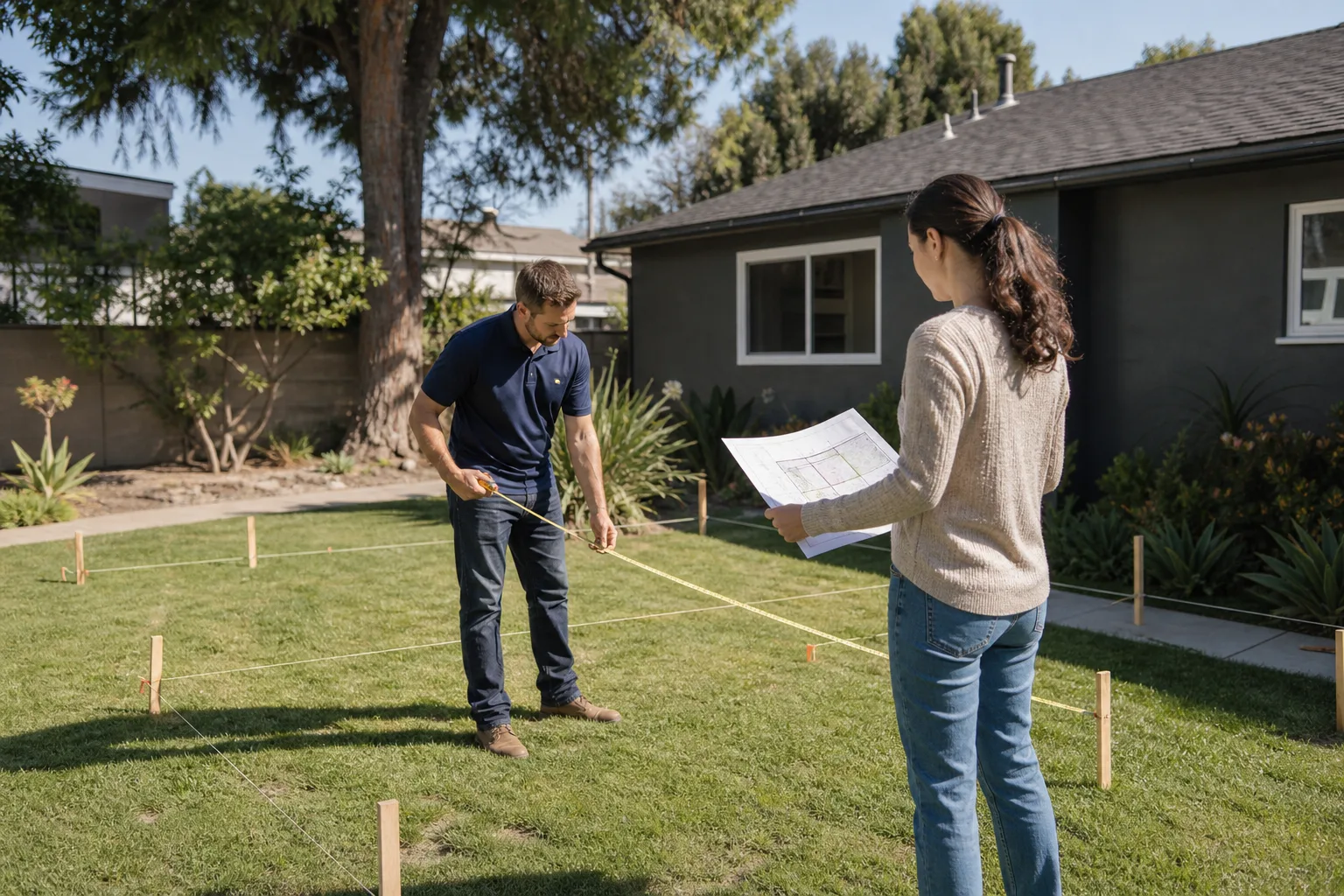
- Site assessment and feasibility. We walk the lot, check access, verify setbacks against the city’s current requirements, look at utility connections, and identify any constraints. This is where prefab-vs-site-built often gets decided.
- Design and permit package. For prefab, we work from the manufacturer’s plan set and adapt the site plan to Folsom’s requirements. For site-built, we design the unit against your use case and go through the city’s plan review. Either way, we handle the permit application and track the review.
- Utility planning. Water, sewer, electrical, and gas routes get mapped against the actual lot. This step looks trivial on paper and produces most of the surprises in the field.
- Site work and foundation. Foundation gets poured, utility trenching happens, and the site gets prepared for whatever comes next. On the prefab path, this runs concurrently with factory build.
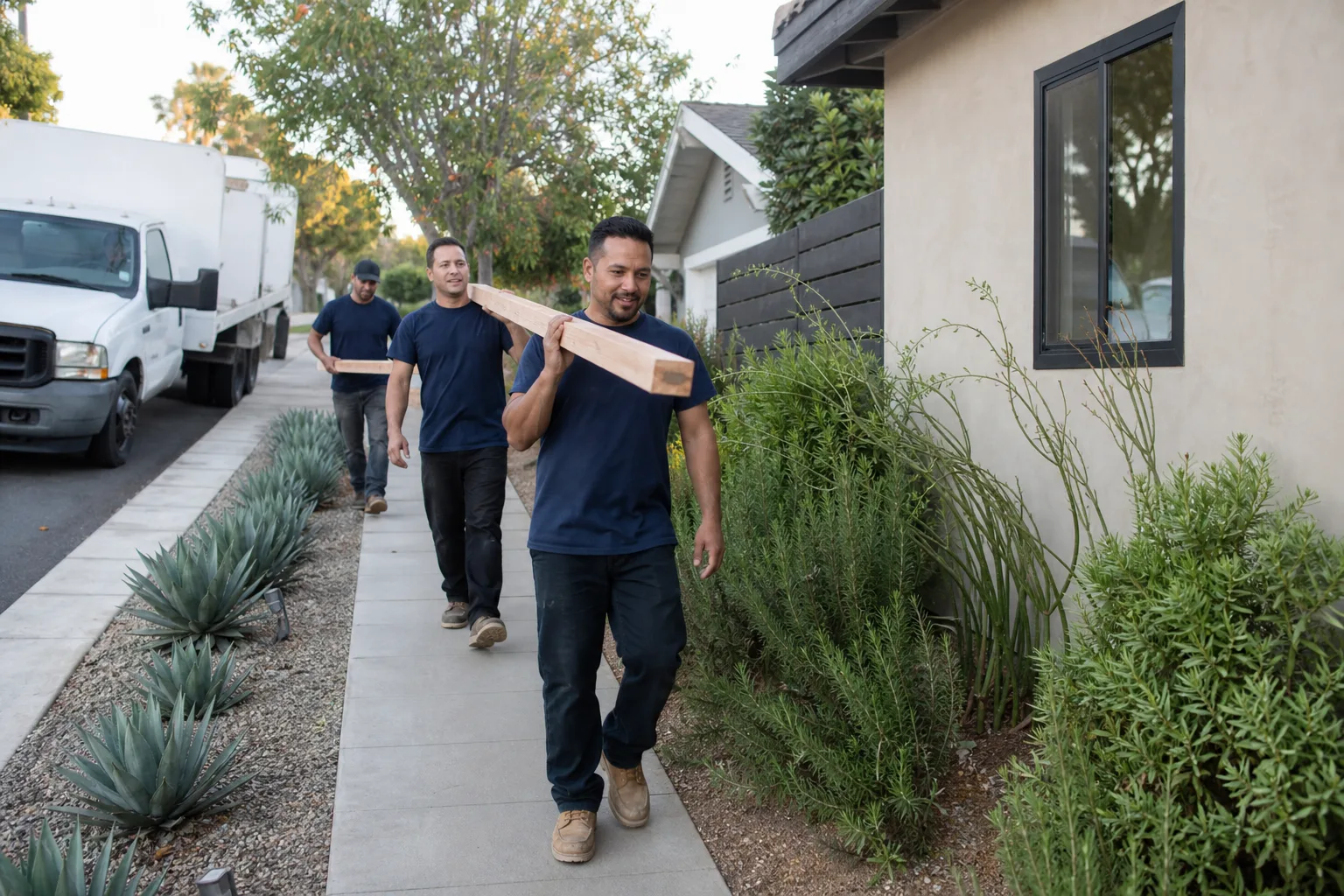
- Construction or delivery. Site-built framing, rough-in, and finishes happen in sequence. Prefab modules get craned into place, set, and secured.
- Final connections and finishes. Utility hookups, landscaping repair, final touches, and the closing tasks.
- Final inspection and sign-off. The city signs off on the whole project, and the unit is ready to occupy.
The site assessment stage is where the two paths really get sorted, and it’s the stage most worth investing in. A thorough assessment at step one saves weeks of frustration at step five. From permit application to move-in day, the process is manageable; the failure mode is skipping the assessment and discovering a lot constraint after the module has been ordered.
Common Mistakes to Avoid
- Choosing prefab before checking crane access. The single most common mistake we see on Folsom projects. Homeowners fall in love with a prefab model, order it, and then discover the crane can’t reach the foundation. Always do a site assessment before committing to a specific manufacturer.
- Expecting prefab to skip the permit process. Prefab streamlines the construction review, not the zoning and site review. If you’re planning a prefab ADU in Folsom, budget permit time the way you would for any new structure, because the city still reviews setbacks, height, coverage, and utility connections.
- Comparing total cost without matching scopes. A prefab quote may not include foundation, utility connections, crane setup, or site repair. A site-built quote may not include design or permit handling. Put both quotes into comparable form before deciding, or you’ll be comparing apples to foundations.
- Skipping the design-and-permit phase to “save money.” The permit phase is where mistakes get caught before they become expensive field problems. Cutting corners there is the most reliable way to spend more, not less. We handle design and permits as a core service because it’s that consequential.
- Picking a builder who only offers one path. A site-built-only builder will tell you prefab is a fad. A prefab-only dealer will tell you site-built is wasteful. Neither is evaluating your lot. Work with someone who has done both and can be honest about which fits yours.
- Placing the ADU without thinking about the Folsom sun. Our summers are hot. An ADU with west-facing windows and no shading strategy becomes a cooling problem from the first July. Orientation and shading should be part of the design, not an afterthought.
- Ignoring rental rules until after construction. If you plan to rent the unit, the rules around rental use depend on the city. Confirm them with Folsom before you build, not after.
When to Call a Professional
There are a few scenarios where bringing in an ADU specialist early saves the most time and money. If you don’t know whether your Folsom lot can handle a crane, that’s a site assessment question and it’s worth doing before you fall in love with a prefab model. If your use case is a family member with specific needs, that’s a design conversation that should happen alongside a feasibility check. If you’re considering a garage conversion or a JADU, those have different permitting pathways than a freestanding unit, and getting the pathway right up front matters. And if you’ve gotten two quotes that look wildly different, that’s usually a scope mismatch, and a specialist can line them up side by side.
ADU Builder Folsom offers free estimates in Folsom. Call (279) 321-8329 for a site assessment and a written estimate that tells you which path fits your lot. Our ADU Builder Folsom team handles design, permits, and construction on both paths, so the conversation is honest from the first call.
Frequently Asked Questions
Not necessarily, and often not by much once you add site work. The factory-built module itself can cost less per square foot than custom site-built construction because the factory captures economies of scale, but a prefab project still requires foundation, utility connections, crane setup, and site repair, which are separate line items. Site-built costs include design and permit handling, which some prefab quotes omit. The honest comparison is total project cost, not module cost. Call (279) 321-8329 for an exact estimate on your lot.
Yes. A prefab ADU in Folsom requires a permit just like a site-built one. What the factory’s certifications do is streamline the building review of the module itself, because the state has already signed off on its construction. The city still reviews zoning, setbacks, height, lot coverage, foundation design, and utility connections against your specific lot. Budget permit time for a prefab project; don’t assume the factory approval covers the site. Call (279) 321-8329 to schedule a free feasibility check.
You need a site assessment that checks crane access, street width, overhead clearance, tree canopy, and ground bearing capacity. This is not something you can evaluate reliably from a satellite image. A quick inspection of the actual lot reveals whether the crane can set up, swing, and reach the foundation. Some Folsom lots are perfect for prefab; others aren’t and never will be. Call (279) 321-8329 to schedule an assessment before you commit to a specific prefab model.
You can request customizations within the manufacturer’s framework, but you can’t get a fully custom floor plan from a factory-built module. Abodu, Cover, and Dvele all offer a range of standard models with some customization options, and those models are well-designed for common use cases. If your project requires a layout that doesn’t map to any catalog plan, site-built is the right path. Call (279) 321-8329 to talk through your layout needs and figure out which path fits.
The schedule is set in the written estimate, and it depends on the path, the design, and the city’s review timeline. Prefab compresses the construction phase because factory build runs in parallel with site work, but the permit phase and site work still take real time. Site-built runs the trades in sequence, so the total spans the full construction timeline. Any honest builder will tell you that the specific schedule depends on your project; anyone promising a fixed number before an assessment is guessing. Call (279) 321-8329 for an estimate with a schedule attached.
You should confirm the rental rules with the city of Folsom before you build, because those rules depend on the city and the lot and can change. From a design perspective, if rental income is your goal, prioritize a floor plan that rents well, durable finishes, and clean separation from the main house. A prefab unit from Abodu or Dvele often aligns with those priorities because the factory finish packages are built for durability and consistency. Call (279) 321-8329 to talk through rental-focused design options.
The Bottom Line
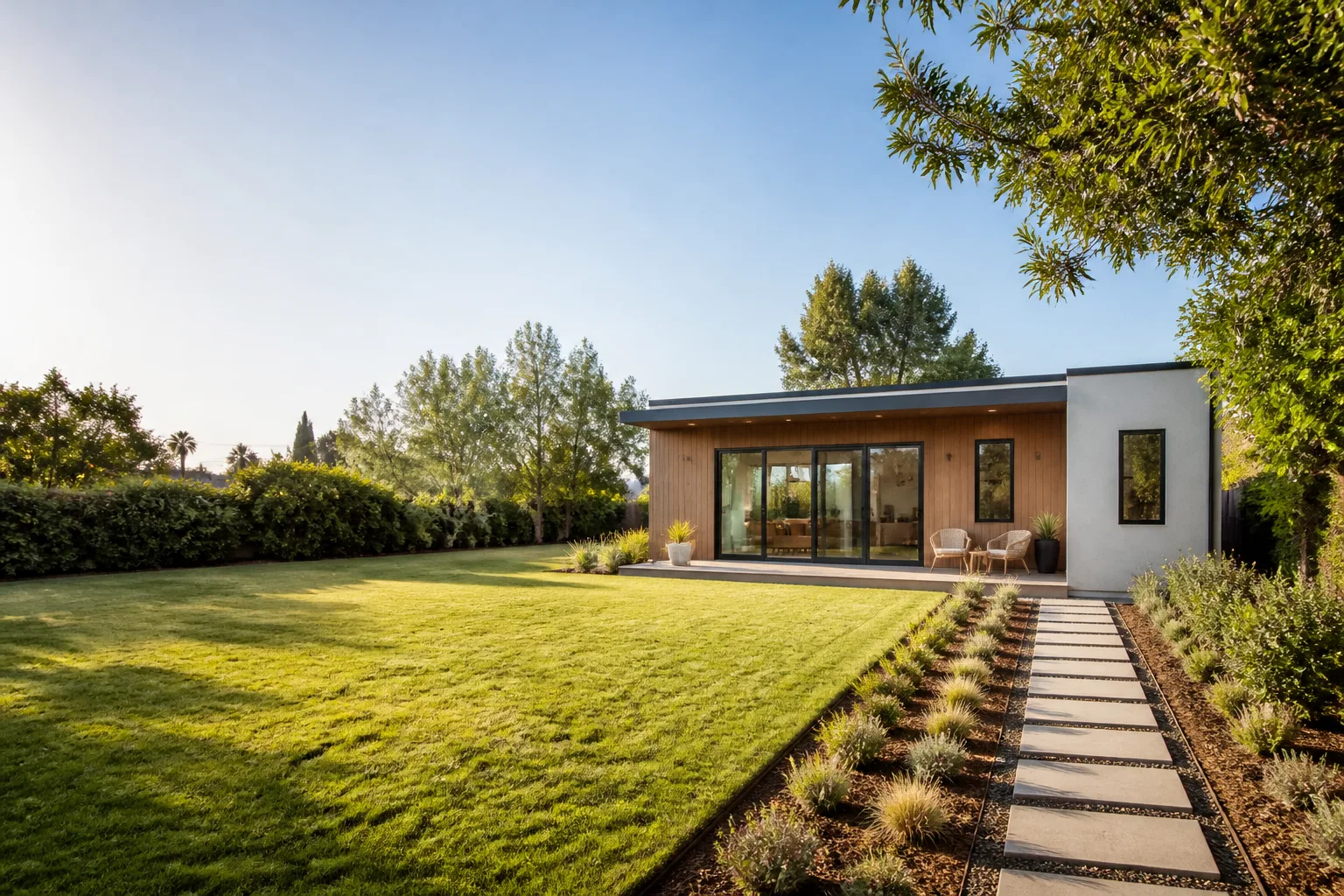
Prefab and site-built ADUs in Folsom solve the same problem in different ways. Prefab buys you factory consistency, moisture control, schedule predictability, and standardized quality from brands like Abodu, Cover, and Dvele. Site-built buys you design flexibility, local accountability for every trade, and the freedom to build exactly the unit your household needs. The decision isn’t which path is better; it’s which path fits your lot, your timeline, and how you’ll actually use the unit. Start with a real site assessment on your Folsom property. From there, the right answer usually makes itself obvious. Site-built or prefab, we build both.
Written by the team at ADU Builder Folsom.