Last updated November 25, 2026
Junior ADU or Full ADU: What Is the Difference?
A Junior ADU costs less to build than a full ADU, and that lower number is exactly what pulls so many Folsom homeowners into the wrong decision. The savings are real, but so are the strings: a JADU has to fit inside your existing house, it caps out at 500 square feet, it requires you to live on the property, and it puts a deed restriction on your title that follows the home when you sell. A full ADU carries none of those limits. This guide walks through the legal differences, the resale consequences, the floor plans that make a JADU practical in Folsom, and the rental math on both paths so you can see which one actually fits your lot, your budget, and your plans for the property.
Quick Answer
A Junior ADU is a small unit built entirely inside the walls of your existing home, limited to 500 square feet, required to share a utility meter with the main house, and tied to an owner-occupancy requirement plus a deed restriction. A full ADU is a separate, self-metered dwelling that can be attached, detached, or carved out of a converted space like a garage, and it can be larger and rented independently. If you want maximum rental income and an unrestricted title, you build a full ADU. If you want the lowest-cost path to housing a family member or adding a modest unit, a JADU can be the smarter play.
Table of Contents
- The Legal Differences That Actually Matter
- What the Deed Restriction Means When You Sell
- Which Folsom Floor Plans Suit a JADU
- Rental Income: JADU With Owner On-Site vs. Detached ADU
- When a JADU Is the Smarter Play
- When a Full ADU Is Worth the Extra Cost
- Design and Permits: The Step Most Homeowners Underestimate
- Prefab vs. Site-Built: How the Construction Path Changes the Decision
The Legal Differences That Actually Matter
Strip away the marketing language and the JADU-versus-ADU decision comes down to four hard legal distinctions. Most homeowners researching junior ADU vs ADU in Folsom CA focus on square footage and cost and miss the occupancy and metering rules, which have far bigger long-term consequences than the size cap.
Here is how the two compare on the points that decide the project:
- Location: A JADU must be created within the existing footprint of the primary dwelling. A full ADU can be attached, detached, or built above a garage, within the limits the city allows.
- Size: A JADU is capped at 500 square feet. A full ADU can be substantially larger depending on the lot and the zoning rules your city applies.
- Owner-occupancy: A JADU requires the owner to live in the primary residence. A full ADU does not carry that requirement under state law, though local rules can vary and are worth confirming.
- Utilities: A JADU must share a utility meter with the main house. A full ADU can have its own separate meters, which matters when you rent it out and want clean billing between units.
The metering rule is the one homeowners underestimate. A shared meter means you and your tenant are splitting one utility bill, which works fine for a family member and gets awkward with a stranger. Separate metering on a full ADU removes that friction entirely.
One more thing worth flagging: ADU rules shift, and the specifics depend on your city, your lot, and how your existing structure is configured. Every rule above needs to be confirmed with the city’s planning or building department before plans are final. We do that confirmation as part of our ADU Builder Folsom design and permit process so nothing gets designed around a rule that changed last quarter.
What the Deed Restriction Means When You Sell
A JADU comes with a deed restriction recorded against your property that requires owner occupancy. That document does not disappear when you list the house. It travels with the title to every future buyer, and it shapes how a buyer’s lender evaluates the property.
In practical terms, here is what the restriction does to a future sale in Folsom:
- The buyer must intend to occupy the home as their primary residence. An investor shopping for a pure rental property is out.
- A buyer planning to rent both the main house and the JADU to two separate tenants cannot do that under the restriction.
- Some lenders ask questions about recorded restrictions during underwriting. The restriction doesn’t kill a loan, but it has to be disclosed and understood, and a buyer’s agent will flag it.
- Your buyer pool narrows. Fewer qualified buyers on a listing usually means less competitive offers, even in a strong Folsom market.
None of this makes a JADU a bad choice. It makes it a permanent choice. If you plan to hold the property for many years and use the JADU for a family member, the owner-occupancy requirement costs you nothing. If you plan to move out in five years and rent the whole property, the restriction is a real obstacle.
A full ADU carries no such deed restriction. The unit can be rented independently, the main house can be rented independently, and the property can be sold to an owner-occupant or an investor without a recorded occupancy condition. That flexibility is baked into the resale value.
Before committing to either path, pull your current deed and any existing recorded documents, and have the city confirm the exact restriction language it requires for a JADU in Folsom. The wording varies, and you want to see it before you sign anything.
Which Folsom Floor Plans Suit a JADU
Because a JADU must live inside the existing walls of your home, the feasibility question is structural and spatial, not legal. Some Folsom homes convert cleanly with almost no structural work. Others need enough modification that the cost advantage over a full ADU evaporates.
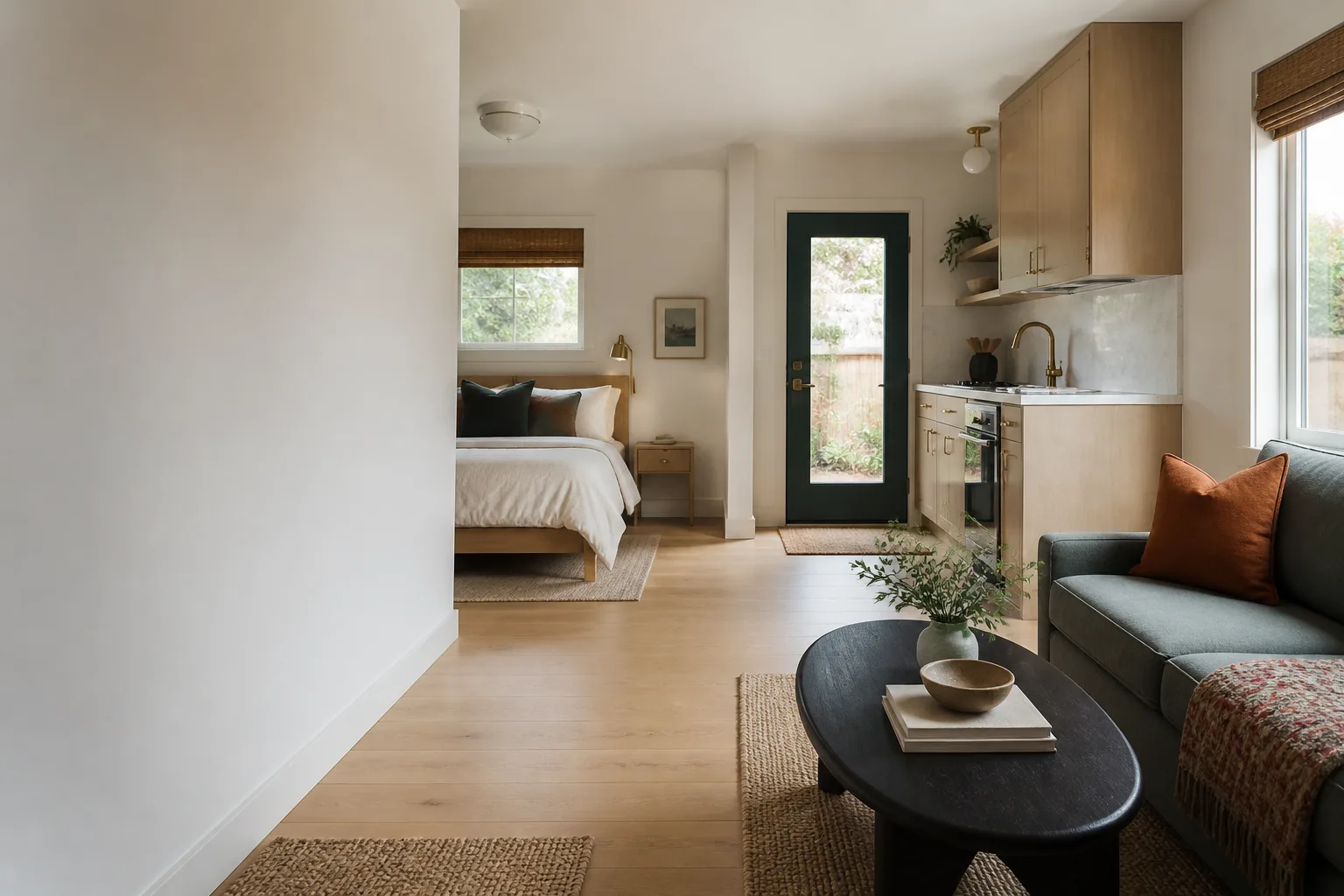
Older homes from the Mather Field era tend to have floor plans that work well for a JADU. Many of them have an oversized attached garage with a workshop bay, a deep utility room, or a large laundry and mudroom zone off the kitchen. Those spaces already have walls, a roofline, and a connection point to the main utilities. Converting one of them into a compliant studio or one-bedroom JADU is often a matter of framing, finishing, and adding a small kitchenette and bathroom rather than moving structure.
Newer Folsom Ranch homes present a different picture. The layouts are efficient by design, so there’s less dead space to repurpose. A few configurations do work:
- Oversized primary suites with a sitting area. A sitting nook with its own exterior door can sometimes be separated with a wall to create an independent bedroom, though kitchen access becomes the limiting factor.
- Flex rooms and bonus rooms. These are the most promising candidates, especially if they sit near a bathroom and have a window on an exterior wall.
- Deep two-car garages on generous lots. A garage conversion can create a JADU, but you lose parking, and the city may have opinions about how that affects the vehicle count on the lot. Rules vary, so confirm with the city.
The single biggest feasibility signal is proximity to plumbing and the panel. A JADU needs a bathroom and a kitchenette. If the candidate space sits directly above or next to existing wet walls, the plumbing runs stay short. If the electrical panel sits nearby with capacity to spare, the electrical work stays contained. If both are true, a JADU is usually practical.
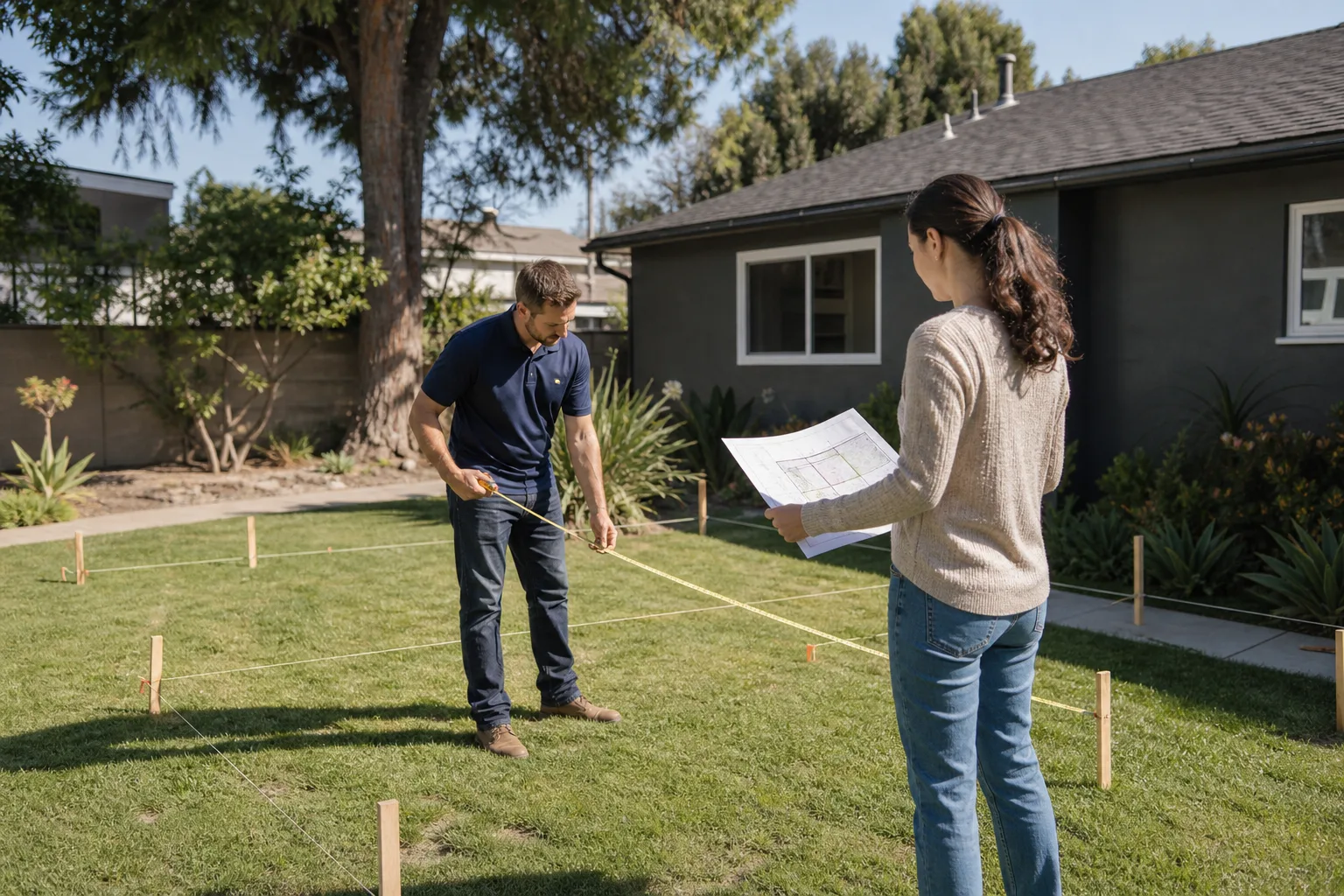
Walk your home with a tape measure before you fall in love with the idea. Mark out a 480-square-foot rectangle in the candidate space and see how it feels. That’s roughly the ceiling for a JADU, and a comfortable studio or compact one-bedroom lives in it. A full ADU is the path when the space you want is bigger than that or detached from the house. Our garage conversion team can assess whether your existing garage lends itself to either route.
Rental Income: JADU With Owner On-Site vs. Detached ADU
The income comparison between a JADU and a full ADU is not just about how much one unit rents for. It’s about how many units the property can generate and who can rent them.
With a JADU, the owner lives in the main house and can rent the JADU to one tenant. The main house cannot be rented separately while the owner is living in it. Under the owner-occupancy rule, the property produces one rental income stream.
With a full ADU, the property can produce two. The owner can live in the main house and rent the ADU, or move out entirely and rent both units. That second income stream is the core economic difference, and it compounds over the life of the investment.
Here is the side-by-side, without specific dollar figures because the market moves and your unit’s size and finish level drive the number:
- JADU, owner on-site: One rental stream from the JADU only. Owner occupies the main house. Utilities shared on one meter.
- Full ADU, owner on-site: One rental stream from the ADU. Main house occupied by owner. Separate meters keep billing clean.
- Full ADU, owner moves out: Two rental streams, main house and ADU, each rented independently. Separate meters in place.
The separation also matters for how a tenant experiences the unit. A detached ADU has its own entrance, its own outdoor space, and its own meter. A JADU shares walls and, in some configurations, an entry. That works beautifully for a parent, a college-age kid, or a sibling. It’s a harder sell to a tenant paying market rent and expecting privacy.
For current rental ranges in Folsom, ask a local property manager for a quote on a unit matching your planned size and finish level. Then compare that single stream against the two-unit potential of a full ADU over the number of years you plan to hold.
When a JADU Is the Smarter Play
There are specific situations where a JADU beats a full ADU, and it’s worth naming them plainly because the JADU gets dismissed too fast by homeowners comparing only on size.
A JADU is the smarter play in these cases:
- Your budget is fixed and a full ADU doesn’t fit. A JADU’s interior conversion scope is smaller than a new construction foundation, framing, and roof, and the cost follows. If a full ADU would stretch you past comfort, a JADU puts a functional unit in place without the strain.
- Your lot is tight. Small backyards, awkward setbacks, or a lot shape that doesn’t tolerate a freestanding structure. A JADU sidesteps the site question entirely because it lives inside the existing footprint.
- You want a family member nearby without full separation. An aging parent, a returning adult child, or a sibling who needs their own space but proximity to the main house. The shared wall and shared meter become features rather than drawbacks.
- You plan to stay put. The owner-occupancy requirement costs nothing if you’re not planning to move.
- You have a floor plan with clear conversion potential. If your home already has a deep utility room, a flex space, or a garage bay that sits near wet walls and the panel, the conversion cost can be meaningfully lower.
The JADU also has one structural advantage worth noting: because it doesn’t require a new foundation, a new roofline, or a new utility trench from the street, the project can proceed without some of the site work a freestanding unit demands. On a tight Folsom lot, that can mean the difference between a project that pencils and one that doesn’t.
Read more about the options on our junior ADU page.
When a Full ADU Is Worth the Extra Cost
A full ADU costs more up front, and in many Folsom situations it’s still the right call. The clearest signal is what you want to do with the property long term.
A full ADU is worth the investment when:
- You want two separate rental income streams. If you plan to move out and rent both the main house and the ADU, a JADU’s owner-occupancy rule will not let you. A full ADU can.
- You want to preserve resale flexibility. No deed restriction, no occupancy condition, full access to owner-occupant and investor buyers.
- You need more than 500 square feet. A two-bedroom unit, a unit with a real living room, or a unit designed for a couple needs the square footage a full ADU can provide.
- You want separate metering. Independent utility billing keeps tenant relationships clean and simplifies your bookkeeping.
- You want a detached unit with privacy. A backyard studio with its own entrance and outdoor space rents more easily and at a higher rate than a shared-wall conversion.
- You plan to sell within a decade. The flexibility a full ADU brings to the resale market is often worth more than the JADU’s up-front savings.
A garage conversion is a middle path worth considering. The structure is already there, the foundation and roof exist, and the resulting unit is fully separate from the main house with its own entrance and meter. It’s a full ADU in legal terms, and it’s often the best value on a Folsom property with a deep garage.
Our ADU builders team can walk a property and tell you which path fits. Both are legitimate. The wrong move is picking one based on the up-front number alone.
Design and Permits: The Step Most Homeowners Underestimate
The JADU-versus-ADU decision is only half the work. The other half is getting through design and permitting, and that’s where most projects lose time. Folsom’s planning and building departments have specific requirements for both unit types, and those requirements need to be confirmed before any design work is finalized.
Here’s how a typical project moves through the process from our side:
- Site and feasibility review. We confirm your lot’s zoning, the current ADU rules for Folsom, and whether the space you have in mind will hold a compliant unit. This is where we separate realistic candidates from wishful ones.
- Concept design. We sketch the unit within your chosen path, whether that’s a JADU inside an existing room or a full ADU on the lot. We check that the layout meets the rules before we draw details.
- Structural and systems planning. If the existing space needs support or utility work, we identify it now rather than after permits are pulled.
- Permit application. We submit the drawings, the plans, and any supporting documentation to the city. We handle the comment rounds and revisions.
- Plan check and revisions. Cities often come back with change requests. We work them, resubmit, and track the file.
- Final permit issuance and construction. The build starts with a fully approved set of plans.
- Inspection and closeout. The project runs to final inspection, and we document the completed unit.
Running this in-house is a real advantage. When design, permit handling, and construction sit with one company, the feedback loop from plan check to build is short and no detail gets lost in a handoff between a designer and a separate contractor.
Expect the timeline to vary. The schedule depends on the scope, the plan check rounds, and the current volume at the city. We set the timeline in the written estimate so you know what to expect before construction starts.
Prefab vs. Site-Built: How the Construction Path Changes the Decision
If you land on the full-ADU path, you have a further choice: site-built or prefab. We build and install both, and we’re authorized to construct and install units from Abodu, Cover, and Dvele. For some lots and timelines, prefab is the obvious answer. For others, site-built gives you more control.
How the two compare on the points that matter:
- Predictability: Prefab units are built in a factory under controlled conditions, which makes the build timeline more predictable than fully custom site work. Factory quality control on the assembly is consistent.
- Customization: Site-built allows full customization to your lot, your family’s needs, and the design of the main house. Prefab units come in defined models with limited customization.
- Site constraints: A prefab unit has to be delivered and set, which requires site access. A lot with a narrow driveway or low overhead clearance may run into delivery limits. Site-built avoids that problem.
- Foundation and utility work: Both paths need site prep, a foundation, and utility connections. Prefab doesn’t skip that; it just moves the unit’s construction into the factory.
For a JADU, prefab doesn’t apply. A JADU is by definition an interior conversion, so it’s always site-built work. This is one more reason the construction-path question only enters the conversation after you’ve decided on a full ADU.
We match each client to the right path based on lot constraints, budget, and how quickly they want the unit in place. That flex is a big part of why we’ve stayed focused on ADUs only: the process, the subcontractor relationships, and the permit knowledge are all optimized for this one project type.
Common Mistakes to Avoid
- Choosing a JADU for the up-front savings and ignoring the resale impact. The deed restriction and owner-occupancy requirement shape every future sale. If you might move within a decade, weigh that before you sign.
- Assuming the JADU fits without measuring the space. Draw out a 500-square-foot footprint in your candidate space on paper before you commit. Many “great candidate” rooms are smaller than they feel.
- Missing the shared-meter reality. A JADU cannot have its own utility meter. If you plan to rent to a stranger, shared billing is a friction point you’ll deal with monthly.
- Designing before confirming the rules. JADU and ADU rules depend on the city, the lot, and the configuration of your existing structure. Confirm with Folsom’s planning or building department before design work is finalized.
- Not checking the electrical panel before committing to a JADU. The panel needs capacity for a kitchenette and bathroom. If it doesn’t, an upgrade enters the budget and can swing the decision toward a full ADU.
- Expecting a freestanding-resale profile from a JADU. An interior conversion is not a separate structure. Lenders and buyers will evaluate it accordingly.
- Going with a general contractor who builds ADUs “sometimes.” The permit pathways, the design details, and the subcontractor relationships for ADUs are specific. A specialist avoids the learning curve on your dime.
When to Call a Professional
The moment to call a specialist is before you commit to a path, not after. If you’re deciding between a JADU and a full ADU, a walkthrough with someone who has run both project types through Folsom’s permit process in recent years will answer questions faster than months of research.
Call us when you need to know:
- Whether your existing home can actually hold a compliant JADU.
- Whether your lot can hold a full ADU within the setbacks and lot coverage Folsom allows.
- Which path makes more sense given your budget, timeline, and long-term plans for the property.
- Whether prefab or site-built is a better fit for your site.
ADU Builder Folsom offers free estimates in Folsom. Call (279) 321-8329. We answer 24/7. Fast dispatch from 7am to 7pm, Sunday through Friday.
Frequently Asked Questions
Yes. A JADU is designed to be rented by someone other than the owner, provided the owner occupies the primary residence. The owner-occupancy requirement is the condition, not a prohibition on renting the JADU itself. Confirm the exact restriction language with the city before committing to the design. Call (279) 321-8329 for an exact quote on your project; estimates are free.
The restriction stays with the property and the new owner must comply with it. That means the buyer has to occupy the home as their primary residence, and the owner-occupancy condition continues. Some lenders will ask about the recorded restriction during underwriting, so disclose it early. Call (279) 321-8329 to talk through how this fits your plans.
Usually yes, because an interior conversion skips the foundation, framing, roofing, and utility trench that a freestanding unit requires. The savings depend on the condition of the existing space, the plumbing and electrical work needed, and the finish level you choose. Call (279) 321-8329 for a written, line-item estimate on your home.
Sometimes, depending on the lot, zoning, and the current ADU rules Folsom applies. Many cities allow a JADU and a separate full ADU on a single-family lot, but the specifics depend on your property and the rules in effect. Confirm with the city’s planning department before planning a two-unit build. Call (279) 321-8329 to review your lot.
No. A JADU is required to share a utility meter with the main house. That’s one of the legal distinctions between a JADU and a full ADU, which can have separate meters. If separate utility billing matters to you, a full ADU is the path. Call (279) 321-8329 to discuss which configuration fits your plans.
Homes with generous floor plans tend to be the best candidates, regardless of neighborhood. Many older Mather Field-era homes have oversized garages, deep utility rooms, or large laundry zones that convert cleanly. Newer Folsom Ranch homes have efficient layouts, so the candidate spaces are more often flex rooms or bonus rooms near a bathroom. Every home is different; a walkthrough tells you in an hour what research can’t.
The Bottom Line
A JADU is the lowest-cost path to a rentable unit in Folsom, and it’s a fine fit for homeowners who plan to stay put and want a family member nearby. The trade-offs are real: a 500-square-foot cap, a shared utility meter, an owner-occupancy requirement, and a deed restriction that follows the property to every future buyer. A full ADU costs more up front and delivers more: a larger unit, separate metering, two potential rental streams, and a title with no occupancy condition attached. The right answer depends on your lot, your budget, and how long you plan to hold the property. If you want to build a JADU, a garage conversion, or a full ADU with confidence, our team can help. Call (279) 321-8329 for a free estimate. We answer 24/7. Fast dispatch from 7am to 7pm, Sunday through Friday.
Written by the team at ADU Builder Folsom.